
Why don’t the corners match on my patterned frame?
Quick answer
A frame made from pre-finished moulding is cut from long lengths that already carry their pattern and finish. Where each 45° cut lands on the pattern decides what meets at the corner, so the four corners rarely match, and cutting through the finish can chip it at the joint. When the corners matter, choose a closed-corner frame: it is joined first and finished after, as one piece, so the finish runs unbroken across the corners.
The question
On a framing forum, a buyer posted photos of a frame they had just picked up from a frame shop: an ornate, glossy moulding whose pattern met differently at each corner, with filler visible in the joints. They asked whether that was acceptable work. It is one of the most common questions about patterned frames, so here is the full answer.
Why the pattern breaks at the corners
Many frames are made from moulding that is finished before it is cut. Four pieces are cut from long lengths with 45° miters and joined. The pattern runs along each length, so what meets at a corner depends on exactly where each cut falls.
Matching all four corners means planning every cut around the pattern repeat. That takes extra moulding, and even then it is not guaranteed, because the repeat is not always perfectly even along a length.
Cutting through a finished surface can also chip it, especially on glossy or raised patterns. The joint is then filled or touched up after joining.
Is a mismatched corner a defect?
On patterned moulding that was finished before it was cut, some mismatch at the corners is normal unless matched corners were agreed when the frame was ordered. Chips, gaps or filler that doesn't match the finish are fair to raise with the shop that made the frame.
Closed-corner vs. cut-and-joined frames
| Cut and joined from finished moulding | Closed-corner | |
|---|---|---|
| Order of work | Finished first, then cut and joined | Joined first, then finished as one piece |
| At the corner | The joint stays visible, and the pattern meets wherever the cut falls | The finish runs unbroken across the corner |
| Finish at the miter | The saw cuts through the finish and can chip it | The finish goes on after the joint is made |
How to get clean corners: closed-corner frames
A closed-corner frame is joined first and finished after. The frame is assembled, then finished as one piece, so the finish runs unbroken across the corners. That is why the corners read as clean as the rest of the frame.
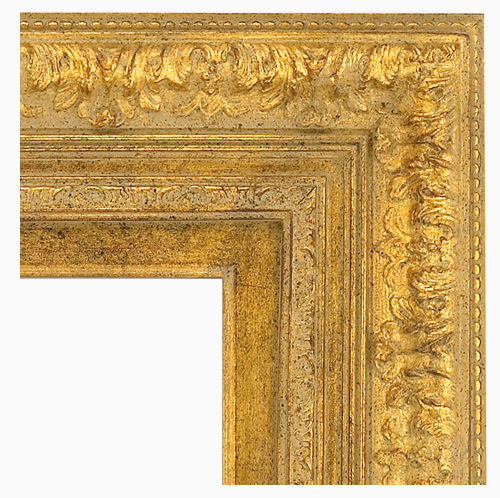
Our closed-corner frames
- Closed-corner construction. Joined first, then finished.
- Hand-finished frames. Many of our wood frames are still carved by hand.
- Built to your specifications. Standard and custom sizes.
- Any finish of your choosing. See the Finishes Gallery.
Who can buy them
We sell wholesale only. Framers, galleries, and working artists and photographers who sell their work can become wholesale dealers: fill out the registration form and we will get back to you with login credentials so you can view pricing and place orders online. Please have your resale number available. The minimum order is $100.00 plus freight/shipping.
Buying a frame for a single piece? Ask your frame shop whether they can order a closed-corner frame.
Questions about closed-corner frames? Call 619-423-2929 or email sandiegoframeco@aol.com.